How Brass Signage Communicates Authority Without Saying a Single Word

Authority does not
necessarily require verbal reinforcement. Visual and material expressions are
likely to reflect power, credibility, and permanence in the built surroundings.
Among these, Brass Signage
takes a different place, with the form, finish, and presence of the signage
projecting strength and legitimacy, not words. It has an effect on the way the
human mind deciphers material signals even before conscious evaluation sets in.
The
Material Language of Authority
Brass has visual
weight that is built into it. Its warm metallic sound gives a feeling of value,
stability, and endurance, whereas its density causes a feeling of seriousness
and purpose. This material, when incorporated into the signage, conveys a
non-verbal message well: the area that it denotes is defined, bold, and
respectable.
Brass, in
comparison to the ephemeral trends in vision, is stable and gives a sense of
order and structure immediately. This tacit communication is effective as
humans have the instinct to attribute permanency and control to durable
material.
Visual
Psychology at Work
Such power of brass
is further strengthened with the help of some psychological processes acting
through perception without being noticed:
●
Considerate warmth that attracts
without immersing the senses
●
Professional shine that implies
taste and not overindulgence
●
Mass that retards visual scanning
and induces concentration
●
The depth of the text that brings
dimensional credibility
Combined, the
qualities form a visual hierarchy, which directs the viewers to perceive
importance without a clear directive.
Hierarchy
Without Language
Brass is frequently
authoritative, and he expresses himself through discipline in design:
●
Sharp edges are indications of
decisiveness and order
●
Monotony of finishes strengthens
consistency and management
●
Balance and confidence are
expressed in calculated proportions
There is no
ambiguity with this organized presentation. The meaning comes to the viewer
instinctively, without the help of an explanatory text or even symbolic imagery.
Permanence,
Trust, and Time
Aging gracefully
creates a feeling of trust through continuity. Brass acquires character and not
deterioration, which supports the impression of stability over time. This
feeling of perseverance reinforces the argument that Brass Signage is a silent
authority marker. The more authority seems to be stable in the long term, the
more it can be trusted because an environment tends to signal continuity and
direction as opposed to change and uncertainty.
Integration
Within Identity Systems
Power is best
achieved when visual materials are in harmony. In larger identity paradigms,
brass is the supplement of official indicators of acknowledgment and status:
●
Goes hand in hand with reserved
typography
●
Favors visual consistency of
spatial touchpoints
●
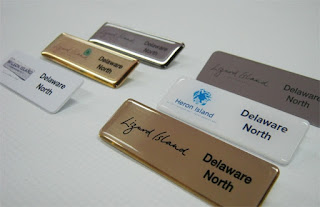
Asserts the symbolic details like Corporate Badges
without contests
With the matching
of materials and identifiers, authority does not seem imposed but purposeful.
Silent
Influence in Spatial Behavior
Other than
aesthetics, Brass Signage also influences the behavior of people within a space
in a subtle and hidden manner. Its presence helps to be attentive, calm, and
respectful because it creates an implicit seriousness. Authoritative visual
signs are innate responses that make people demonstrate a change in pace,
posture, and attention.
This change of
behavior does not require instruction, and this is how brass can be used to
change interaction patterns without the use of specific direction, but through
an atmosphere that supports authority by experience rather than by commands.
In
Conclusion
Brass does so
through a subtle involvement of the senses by prompting a feeling of confidence
even before the processing of words. Combined intelligently with other systems
such as the Corporate Badge, brass is now an object of choice as a strategic
communicator. It creates order, credibility and presence without uttering a
word to show that, in many cases, the real authority is what is felt but not
said.

Comments
Post a Comment